
aarppe
aarppe
This concerns the case when the English definition has something in parentheses that we do not want to pass onto the phrase inflection, cf. 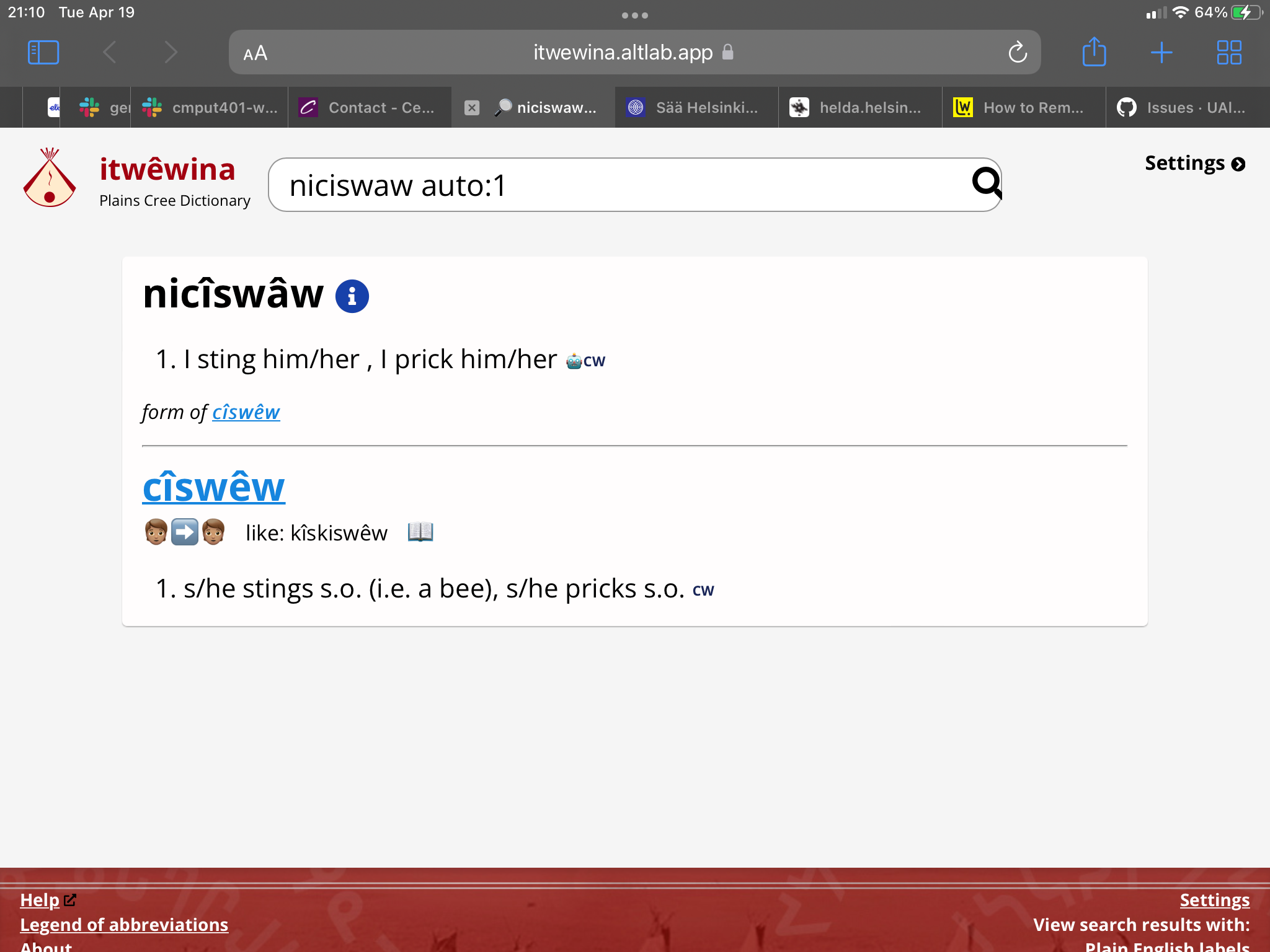 In the above it works...
And for the 'mîcisow' case, the current implementation does seem to work, but we need to check whether it's achieved on the coding or DB side, cf. 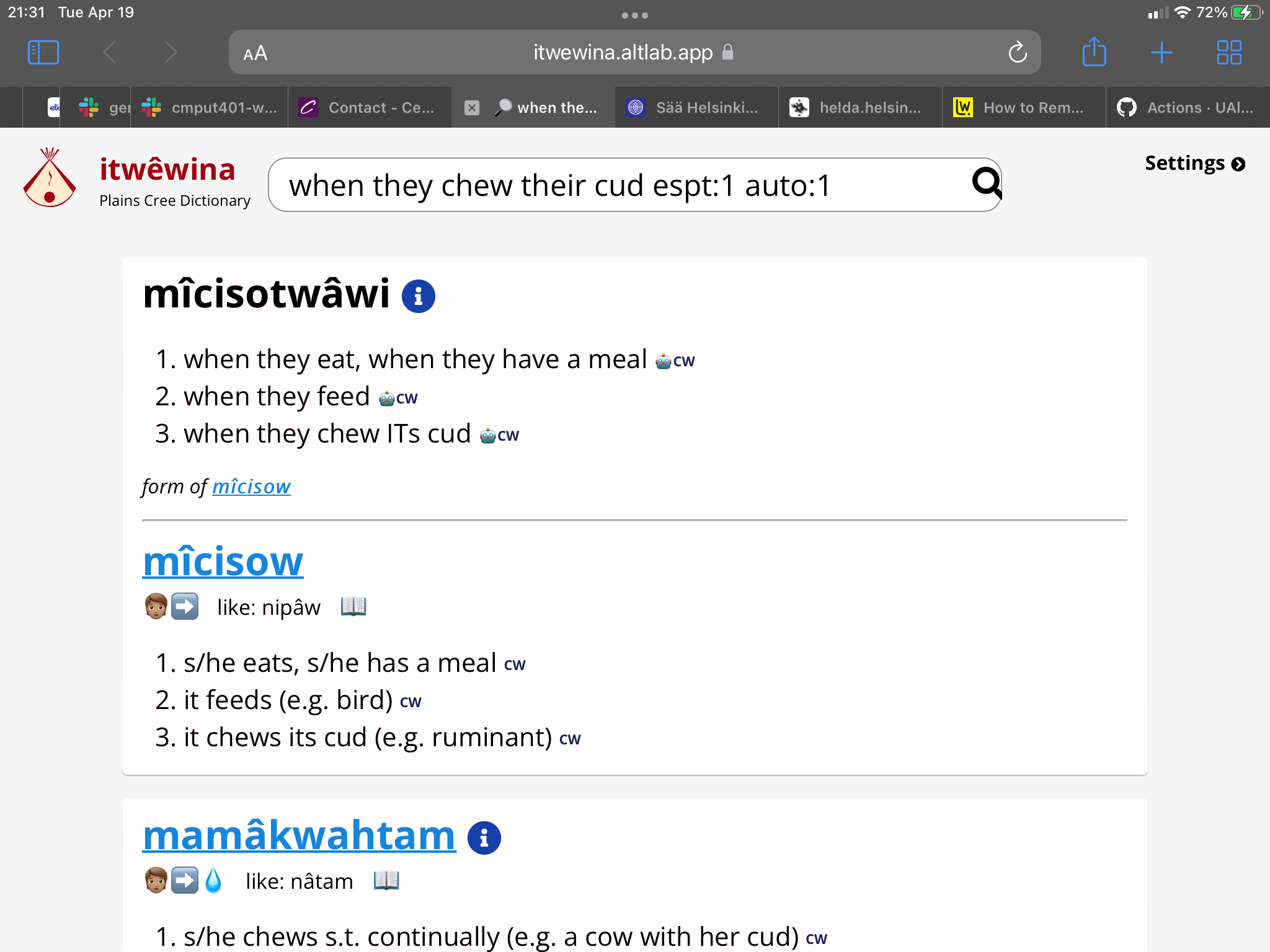
For recordings, we should also be able to distinguish, in the inflectional paradigms, between a) a recording spoken by a person (like: 🧑🏽🔈), and b) a recording generated by a...
Here's the visualization we discussed today (**UPDATE**: removed squiggly lines due to English spell-checking): [below with English translation pop-up:]  We have robo-speech available in this case for all inflected...
@kobexamoh In the above comment, I hope to have sketched out all the possible combinations of features we might want to be able to show. As discussed earlier, we might...
Some further mock-ups. These represent two strategies: 1) using toggles to supplement across-the-board information to a basic paradigm; and 2) showing the full extent of available information as pop-ups for...
@nienna73 When getting to the implementation of showing morpheme boundaries (and other things), the sketches above may be worthwhile to review.
Looks nice. Eddie was using the gender-neutral generic person emoji 🧑 (with a darker skin/hair tone). But with actual people speaking, we probably could use the genders-specific emojis, since we...
Ok. This would correspond to a recollection that I had about how the English translations were originally implemented, i.e. that they were pre-generated rather than generated on the fly. As...
Great! Are you using the newest English phrase generator transcriptor for verbs?