
Aurélien Geron



Aurélien Geron
Hi @kartikcpp , The problem comes from the fact that `fetch_openml()` used to return a NumPy array, but it now returns a DataFrame. Please call `fetch_openml()` with `as_frame=False` as argument...
Hi @BHariKrishnaReddy , Thanks for your feedback. The problem comes from the fact that `fetch_openml()` started returning Pandas DataFrames instead of NumPy arrays since Scikit-Learn 0.24. This messes up a...
Hi @Reisa14 , Thanks for your feedback. Sadly, I can't reproduce this issue, when I run the notebook locally or on Colab, I don't get this warning at all. Could...
Thanks @Reisa14. Mmmh, this might be a TF bug, I see nothing wrong with your code. Could you please file a bug with TensorFlow?
Hi @ladylazy9x , Thanks for your question. The book describes 3 different ways you can deal with null values: ```python # option 1 = just drop the rows that contain...
Thanks for your feedback. However, I don't see the discrepancy. Indeed, here is what figure 5-11 looks like in my copy of the book: 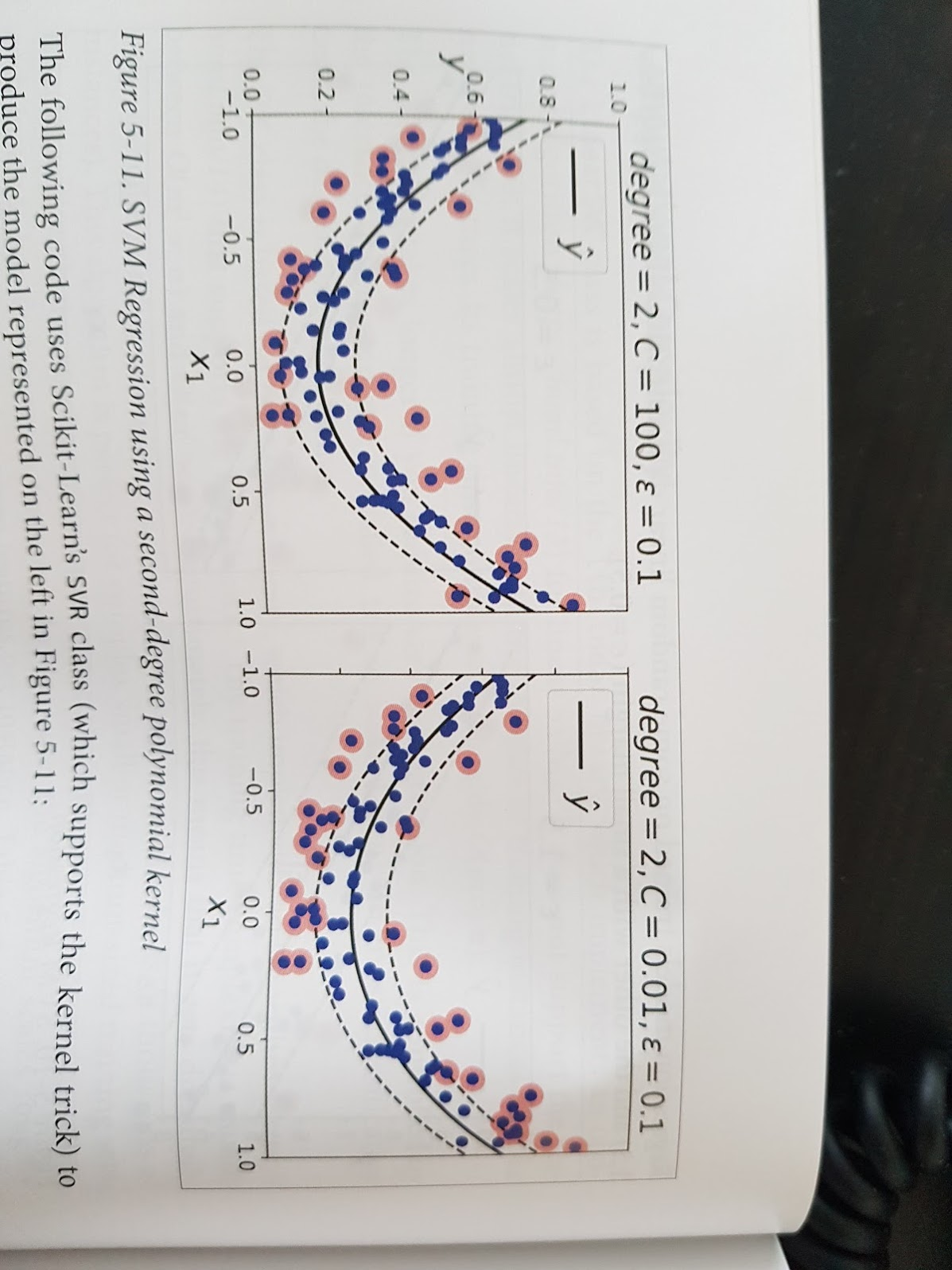 And here is what it...
Great feedback, thanks @lebaste77 , I'll report these issues to the french editor (Dunod). 👍
Hi @ladylazy9x , Thanks for your feedback. Both the book and the notebook contain the following code: ```python import joblib joblib.dump(my_model, "my_model.pkl") #... my_model_loaded = joblib.load("my_model.pkl") ``` This shows how...
Oh I see! It's just identical to `my_model`. So you can make predictions with it, just like you would with `my_model`: ```python my_model_loaded.predict(X_new) ``` Makes sense?
Ah yes, sorry about that, these are the last two exercises which still need a solution. I'll try to add them in the next few weeks (unless someone would like...