
Minh Nguyễn




Minh Nguyễn
For context, South Africa’s directions signs follow a UK design: no shield, just a number in plain text in gold, with the alphabetic designation inline. 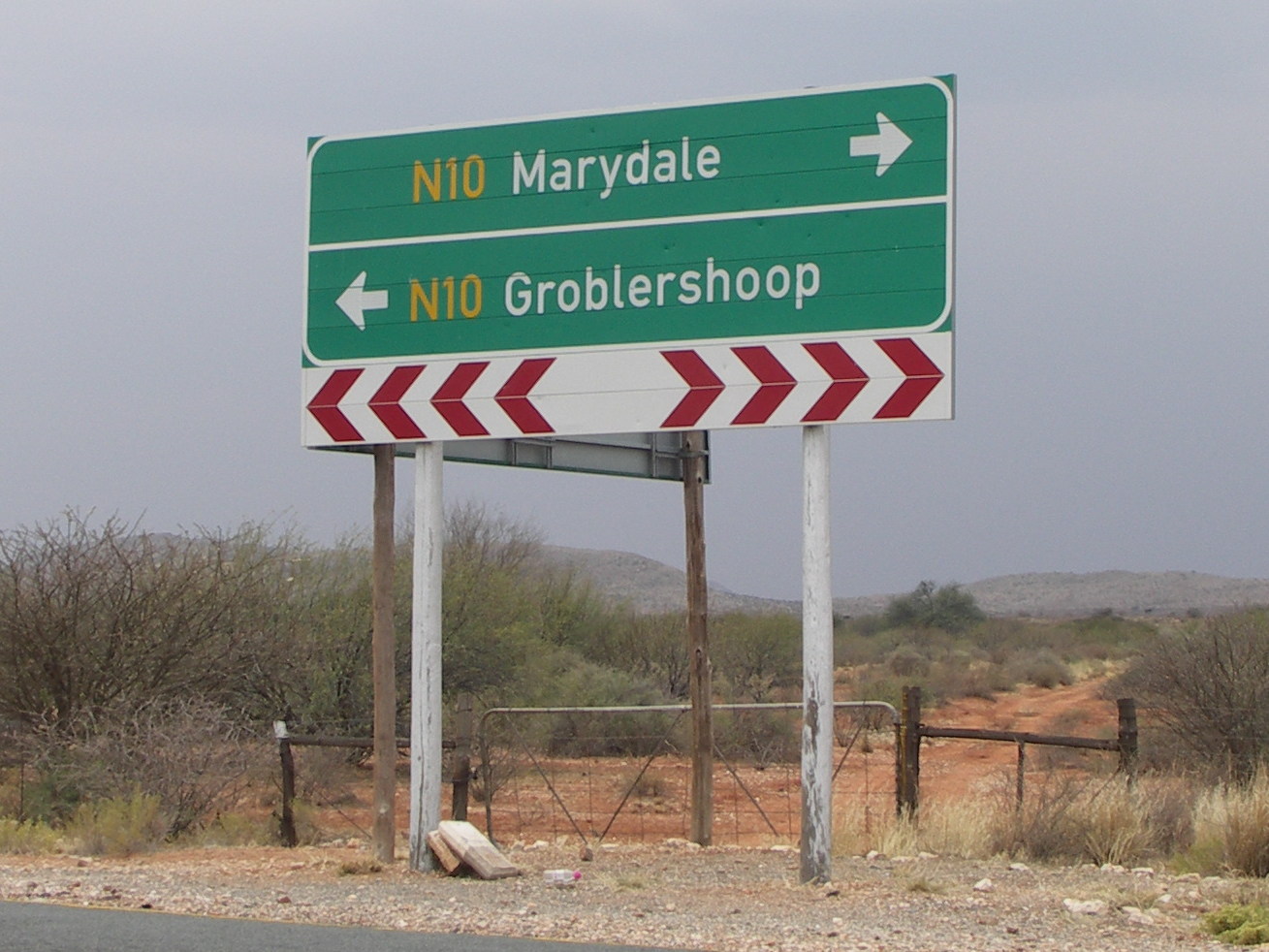 However, the blue pentagon...
Between this and #162, I suspect the prefixes are just there for consistency with way `ref`s. The photo above isn’t representative of how routes are marked on maps. Normally the...
Yes, there are already several examples of [`network=US:I:Future`](https://taginfo.openstreetmap.org/tags/network=US%3AI%3AFuture), so `network=US:US:Future` would be sensible. The way ref was probably abbreviated as “Fut” from back in the days when openstreetmap-carto could only...
Yes, [`network=PK:national`](http://taginfo.geofabrik.de/asia/pakistan/tags/network=PK:national) is the tagging scheme for national routes in Pakistan. No other `PK:`-prefixed `network` value appears to be in use so far.
Saudi Arabia posts its route numbers only in Eastern Arabic numerals, but currently they’re tagged only in Western Arabic numerals: #467.
For some ROC shields, we’re showing Chinese characters instead of the corresponding alphabetic suffixes because that’s what’s in the vector tiles: https://github.com/ZeLonewolf/openstreetmap-americana/issues/141#issuecomment-1157248693.
In addition to numeral systems, some `ref`s contain homoglyphs. For example, in Greece, we display shields for [E roads](https://www.openstreetmap.org/relation/5953973) using the Latin “E” but [motorways](https://www.openstreetmap.org/relation/362575) using the Greek “Α” and...
#411 tracks Jalisco’s state and rural highway shields.
> it is unclear which values correspond to Federal Highways, highways of Mexico City, and highways of the State of Mexico Currently, `MX:`-prefixed `network` values are a mix of [two-letter...
A user in the Latin American Telegram chat suggested @mdelatorre‘s [Mexico road signs plugin for JOSM](https://github.com/mdelatorre/RoadSignsMX/) as a resource. We should make sure this style and that plugin align on...