
webiny-js
 webiny-js copied to clipboard
 webiny
🤯 Headless Pages
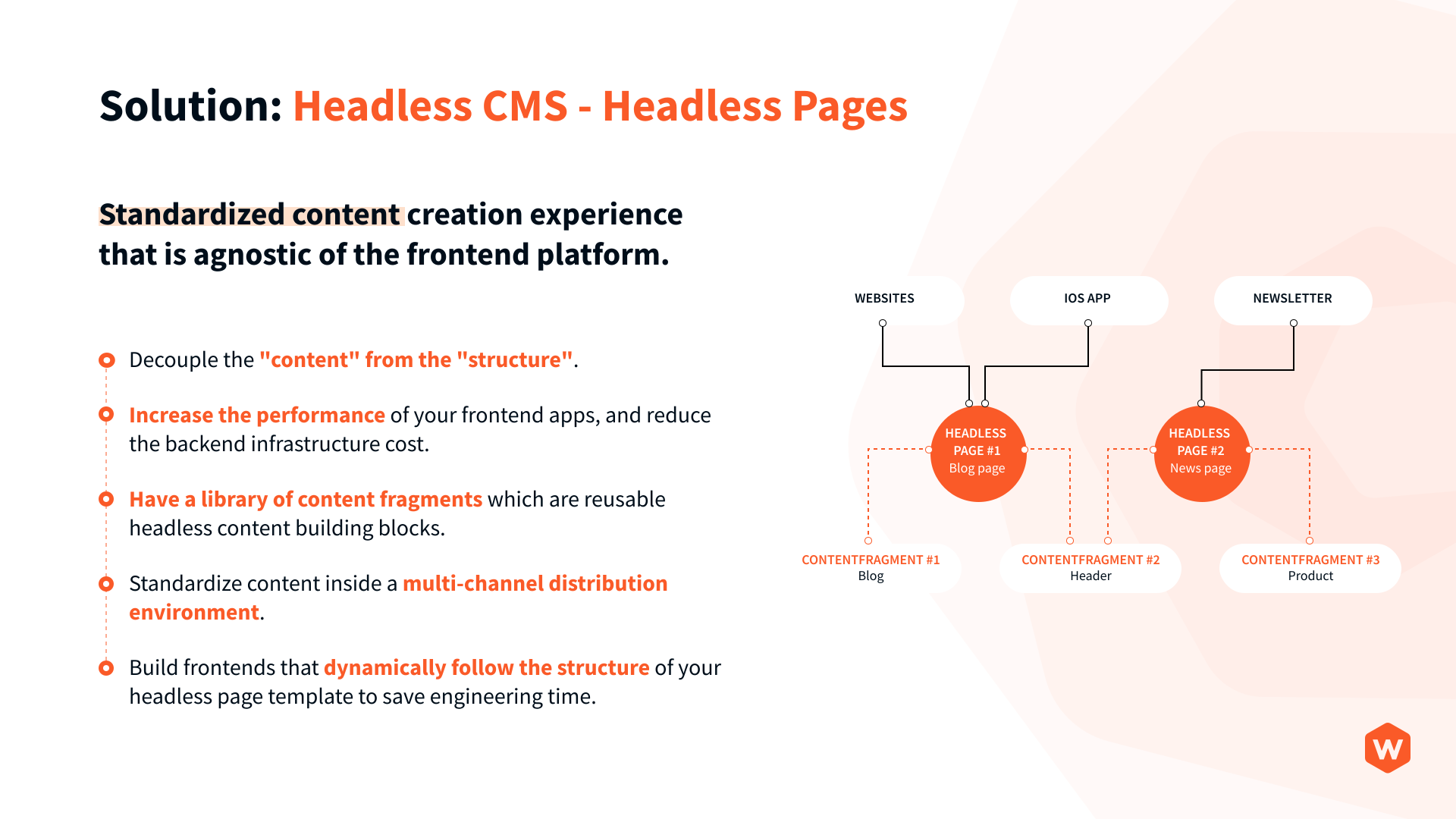
Enable content standardisation and organisation at scale using Headless Pages. Organisations that manage and produce content at scale will be able to not only define how their content looks like, but also how it’s put together. It empowers editors to follow defined rules around content structure, and reduces the effort developers need to invest to display the content inside a website or an application.
Headless Pages introduce a way to define a template which is made up of one or more content models. When a content editor is creating an instance of such a page, they only pick the entries from existing content model they wish to add to that page. The entries are the smaller parts of the page. Because editors only pick the atomic parts from a pre-existing set, it’s a great way to introduce standardisation, and because the Headless Page template defines rules in terms of which entries can be picked and how many, it ensures all the entries within this template follow the same pattern. Finally, developers don’t need to contact multiple APIs to retrieve all the content needed to render a page, they can work with a single endpoint managing that Headless Page.
