
designdeck
 designdeck copied to clipboard
 teivah
An Open-Source Collection of 230+ Flash Cards to Help You Succeed in Your System Design Interview and More 💯

Overview
Design Deck is an open-source collection of 230+ system design flash cards.
It helps you prepare and succeed in your system design interview.
The topics covered are the following:
- Cache: eviction, locations, strategies, when to use a cache, etc.
- Cloud: main cloud components
- Database: ACID, CAP, partitioning, consistency, isolation, denormalization, etc.
- Design: general topics such as idempotence, bloom filter, causality, asynchronous communications, vector clocks
- HTTP: main HTTP knowledge
- Kafka: main Kafka building blocks
- Math: discrete math
- Network: TCP, CORS, ping & heartbeat, OSI, etc.
- Reliability: reliability patterns
- Security: main security knowledge such as TLS, cipher, encryption
Anki Deck
Anki is a free software (Windows/Mac/Linux/iPhone/Android) which makes remembering things easy. It utilizes spaced repetition which is a proven technique to increase the rate of memorization:
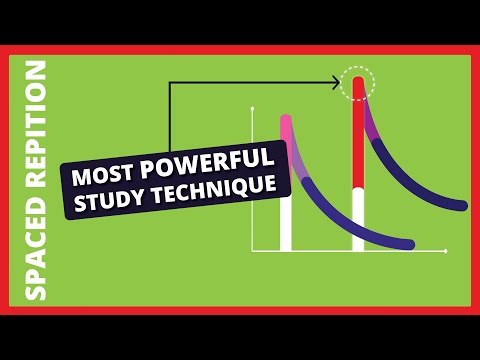
Spaced Repetition: The most powerful study technique on YouTube
The single biggest change that Anki brings about is that it means memory is no longer a haphazard event, to be left to chance. Rather, it guarantees I will remember something, with minimal effort. That is, Anki makes memory a choice.
Michael A. Nielsen, "Augmenting Long-term Memory"
Using Anki is a great way to prepare your system design interview. Here is a flashcard example:

The Anki version (a clone of the +200 flashcards from this repo) is available via a one-time GitHub sponsorship tier for $21: ❤️ Sponsor, One-time tab, Access to the latest Anki deck version of Design Deck tier.
Cards Index
Cache
- Cache aside
- Cache aside vs. read-through
- Cache eviction policy
- Cache locations
- Cache: refresh-ahead
- Cache: write through vs. write back
- Four main distributed cache benefits
- Main metric for cache
- Read-through cache
- When to use a cache
Cloud
- CDN
DB
- 3 main reasons to partition data
- ACID property
- Anti-entropy
- Byzantine fault-tolerant
- CALM theorem
- CAP theorem
- Caveat of serializability
- Chain replication
- Chain replication vs. consensus
- Change data capture (CDC)
- Concurrency control
- Consensus
- Consistency models
- CQRS
- CRDT
- CRDT and collaborative applications (e.g., Google Docs)
- DB indexes tradeoff
- DB internal components
- DB: read vs. write-heavy, latency vs. consistency, availability vs. consistency, ACID vs. non-ACID
- Delta CRDTs
- Denormalization
- Design consideration when partitioning data
- Downside of distributed transactions
- Event sourcing
- Eventual consistency requirements
- Examples of solutions offering leader election abstractions
- Federation
- Fencing token
- Gossip protocol
- Graph DB main use case
- Hinted handoff
- Hot spot in partitioning
- In a database, strategy to handle rebalancing
- Isolation levels
- Known CRDTs
- Last-write-wins (LWW)
- Leader election
- LSM tree
- LSM tree vs. B-tree
- Main difference between consistency models and isolation levels
- Merkle tree
- Monotonic reads consistency implementation
- MVCC
- N+1 select problem
- NoSQL: main types and main architecture principles
- Operation-based CRDTs
- Operational transformation (OT): concept and main drawback
- Optimistic concurrency control: pros and cons
- PACELC theorem
- Partitioning (sharding)
- Partitioning criteria
- Partitioning methods
- Quorum
- Raft
- Read repair
- Relation between replication factor, write consistency and read consistency
- Replication vs. partition: impacts
- Schema-on-read vs. schema-on-write
- Serializability
- Serializable Snapshot Isolation (SSI)
- Single-leader, multi-leader, leaderless replication
- Sloppy quorum
- Snapshot Isolation (SI)
- Snapshot Isolation common implementation
- SSTable
- State-based CRDTs: definition and requirements
- Strong eventual consistency: definition and requirements
- Three-phase commit (3PC)
- Transaction
- Two main approaches to partition a table that has secondary indexes
- Two types of CRDTs
- Two-phase commit (2PC)
- WAL
- When relational vs. when document
- When to use a column-oriented store
- Why DB schemaless is misleading
- Why is in-memory faster
- Write and read amplification
- Write heavy and replication type
Design
- Auditing
- Backward vs. forward compatibility
- Bloom filter
- Causality
- Concurrent operations
- Consistent hashing
- Design impacts of sharing
- Design: read-heavy vs. write-heavy impacts
- Different types of message failure
- Event log vs. message queue
- Exactly-once delivery
- FLP impossibility
- Geohashing
- Hashing definition and size of MD5 and SHA256
- HDFS
- How to reduce sharing
- HyperLogLog
- Idempotent
- Latency numbers every programmer should know
- Lease
- Least loaded endpoint load balancing strategy
- Liveness property
- Load balancing
- Load shedding
- Locality
- Log
- Log compaction
- Main drawback of shared-nothing architectures
- MapReduce
- Microservices: pros and cons
- Number of values to generate to reach 50% chances of collision: 32-bit, 64-bit, and 128-bit hash
- Orchestration vs. choreography
- Outbox pattern
- Perfect hashing
- Quadtree
- Rate-limiting (throttling): definition and algos
- Rebalancing
- REST
- REST vs. gRPC
- Safety property
- Saga
- Scalability
- Scalability ceiling
- Shared-nothing architectures
- Source of truth
- Split-brain
- Throughput
- Total vs. partial order
- UUID
- Validation vs. verification
- Vector clock
- Why asynchronous communication
HTTP
- 301 vs. 302
- 403 or 404?
- Cookie
- Four main HTTP/2 features
- HLS
- HTTP
- HTTP cache-control header
- HTTP Etag
- HTTP keep-alive
- HTTP methods: safeness and idempotence
- HTTP safe method
- HTTP status code 429
- HTTP status codes
- What happens if you type google.com in your browser
Kafka
- Consumer types
- Durability/availability and latency/throughput tradeoffs
- Log compaction
- Offset
- Partition
- Partition distribution
- Rebalancing
- Segment
- Shared subscription
Math
- Associative property
- Commutative property
- Harmonic mean
Network
- ARP protocol
- Average connection speed in USA
- Backpressure
- Bandwidth
- BGP
- CORS
- Difference ping & heartbeat
- Difference TCP & UDP
- Difference view & materialized view
- DNS
- DNS lookup: push or pull
- Health checks: passive vs. active
- Internet model
- Layer 4 vs. layer 7 load balancer
- MAC address
- Max size of a TCP packet
- MQTT LWT
- NTP
- OSI model
- Routers
- Routers buffering
- Routers processing
- Routing table
- Service mesh
- Switch
- TCP congestion control
- TCP connection backlog
- TCP flow control
- TCP handshake
- Websocket
- Why can't we rely on the system clock in distributed systems?
Reliability
- Bulkhead pattern
- Cascading failure
- Causal consistency implementation
- Circuit breaker
- Exponential backoff
- Fault tolerance
- Jitter
- Knee point
- Phi-accrual failure detector
- Retry amplification
Security
- Authentication
- Certificate authorities
- Cipher
- Confidentiality
- Integrity
- Mutual TLS
- OAuth 2
- Public key infrastructure (PKI)
- TLS handshake
- Two main uses of encryption
- Two types of encryption
- What does digital signature provide
- What does TLS provide?
References
- Designing Data-Intensive Applications
- Understanding Distributed Systems
- Distributed Systems for practitioners
Additional Notes
If you're preparing an algorithm & data structure interview, you can take a look at Algo Deck
 teivah