

 osuAkatsuki
feature: Implement authentication for API v2 based on OAuth2 potocol.
Describe your changes
Created authorization for third-party clients based on the OAuth2 protocol standard.
Related Issues / Projects
https://github.com/orgs/osuAkatsuki/projects/2
Checklist
- [x] The changes pass pre-commit checks (
make lint) - [x] The changes follow coding style

hey, there are quite a few typing errors still, i suspect your vscode is using type_checking_mode: off in your preferences
you can open preferences with ctrl+, and set type checking mode to basic to have vs code redline any of these errors
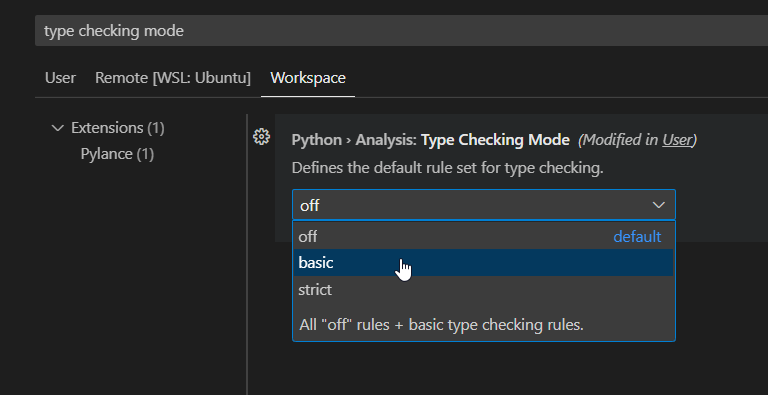
e.g.
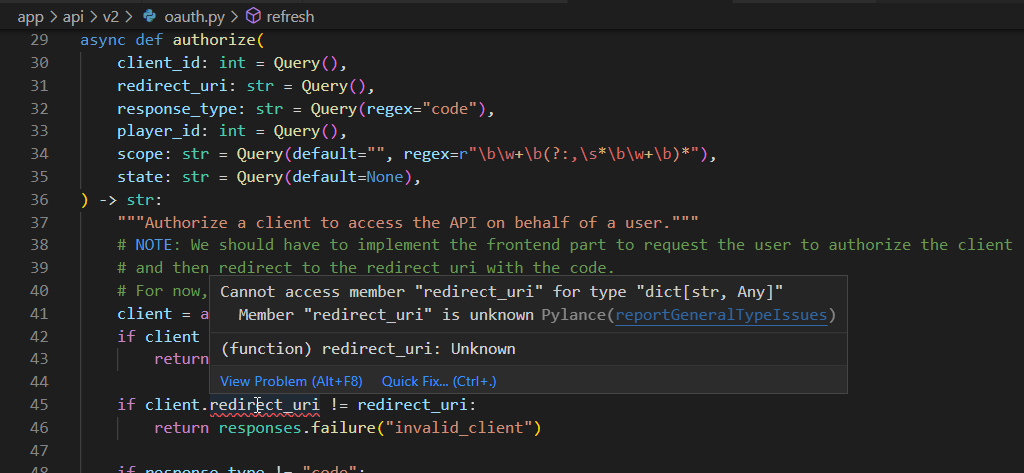


there are also quite a few cases like this state: str = Query(default=None), where the variable is typed as T but at runtime can actually be of type Optional[T] due to the default case
started work, a couple of things stand out:
- since this is meant to be an api for custom web apps (other than the osu! client), i think we should use jwt for it's symmetric key verification mechanism to avoid storing raw access tokens in our application. we can include verifiable claims in the token such as a
token_id, which can be stored server-side to enable token revocation by server staff without the storage of a signed access token. - i'm not certain whether it's best to persist access tokens vs. refresh tokens vs. both -- i'll have to look a bit deeper into the oauth 2.0 standard to see if there's a reason to prefer one over the other.
- there hasn't yet been much thought yet put towards the mechanisms which should be made available to server admins w.r.t. access controls -- i think two main ones that come to mind are:
- ability for server staff to revoke all sessions for a given user
- ability server staff to temporarily disable a user's account
- there isn't much client-identifying information being collecting alongside the authorization grants -- i think it would be wise to store simple identification information such as the client ip address, and user agent along with grants or tokens.
- there are some implementation-specifics that need adjustments -- shouldn't be very major; the previously mentioned issues are more important/fundamental than these implementation specifics.
overall i think i'll continue to work on top of this pr, as it's quite decent at matching the spec so far -- nothing particularly wrong.
- i'm not certain whether it's best to persist access tokens vs. refresh tokens vs. both -- i'll have to look a bit deeper into the oauth 2.0 standard to see if there's a reason to prefer one over the other.
It may also be worth storing other things, such as authorization grants and failed authorization attempts.