

 lmcinnes
Using the transform function and binary metrics for new data doesn't seem to work properly
First of all, congratulations for the beautiful work!
In my project I am using UMAP with metrics for binary data. It performs very well, as can be seen in the figure below.
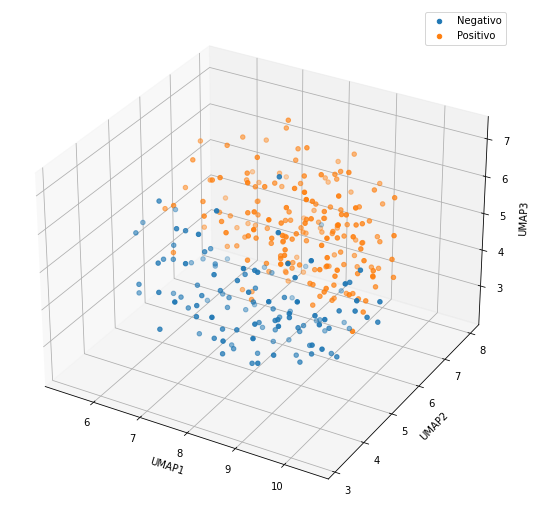
However, when I use it for new data, the results are mixed (as can be seen in the figure below). This result only happens when I use the metrics for binary data. At first I thought that there could have been a change in the data characteristics. However, when I use other metrics the data seems more coherent (despite the deterioration in performance). Do you have any idea what might be going on? The green dots are the new data.
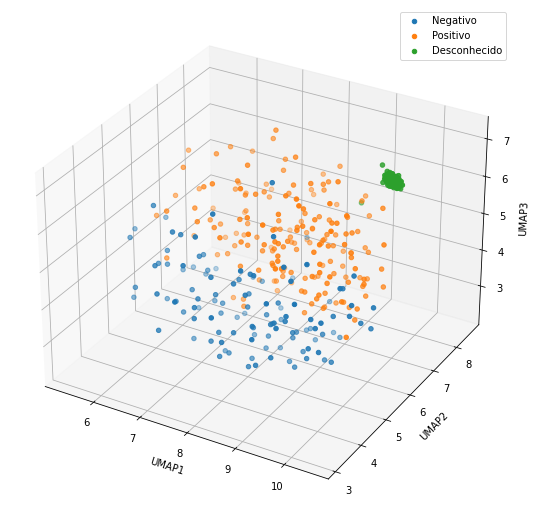

I forgot to put the commands I'm using:
reducer = umap.UMAP(n_neighbors=3, n_components=3, random_state=23, metric='dice', transform_seed=23, min_dist=0.7, n_epochs=1000) reducer.fit(X1) umap_data = reducer.transform(X1)
New data: X_test_fs = reducer.transform(X_test)
Nothing super obvious springs to mind. The binary metrics like dice are always going to be a little trickier, but conceptually it should all work roughly as expected. I'll try to look into this a little more when I get some time.

Same issues happen to me, whatever metric i set. Its clear in train data, but messed up in new data.
