

 keep-network
Usability Survey
Usability Survey
Part 1: Background
A few background questions — these are NOT REQUIRED, but are helpful for us to connect feedback to a variety of different types of audiences.
- What is your profession?
Software engineer and designer
- When did you first get involved with crypto?
2011
- Do you have KEEP tokens? a. If yes, then proceed with the user survey. b. If no, they will need to have KEEP tokens to be able to use the token dashboard. Skip Part 2, Q3 & Q4 and Part 3 if the participant does not wish to get KEEP tokens.
Yes
Part 2: Onboarding
Onboarding refers to the stages you go through in the beginning, as you're initially getting involved with a project.
- Can you describe to me what is staking with the Keep Network?
Depositing KEEP and ETH tokens required to operate a node for the decentralized network of nodes that power Keep applications, which include the Random Beacon service which provides a source of randomness on the blockchain and ECDSA which is the backend of tBTC, a bridge to allow the value of bitcoin to be used on the Ethereum blockchain.
- What information about staking on Keep, if any, did you find difficult to understand or to find answers about?
At the time I was getting started a few months ago, it was hard to tell what was the latest version of documentation for setting up a node, because the community had created so many different guides, and many of them were out of date. It was not clear what the authoritative source was. It was also hard to understand the risks involved in staking.
- Are you staking with a provider? a. If yes, why did you decide to stake with a provider vs. staking for yourself? Describe how you were set up with the provider and any general feedback. b. How long have you been staking with the provider?
No.
- Are you staking for yourself? a. If yes, why did you decide to stake with a provider vs. staking for yourself? Describe your experience of how you learned how to set up a Keep staking node, and any other general feedback about the experience of staking for yourself. b. How long have you been staking for yourself?
Yes. I decided to stake for myself because I am a technical person with the knowledge to operate the node well. I found it interesting to set up the node and all of its requirements, and it was a fun challenge to set things up to make it as resilient as possible. I trusted myself to operate a node better than providers.
I have been staking for myself with Keep since a few weeks after the current iteration of tBTC was launched on mainnet. Before that I was staking for myself with Keep on Ropsten for several weeks.
- Where did you learn the most information about staking on Keep? (Keep website, Keep staking documentation, blog post, or elsewhere).
I learned the most from the Discord, and the official "run" documentation in the docs folder in the keep-core and keep-ecdsa GitHub projects,
Part 3: Staking
Please go to https://dashboard.keep.network/overview for the next part of this test. Screenshots are helpful.
- Were you able to connect a wallet to the dashboard? Any feedback on this stage?
Yes. My feedback is that it is inconvenient that I have to re-connect my wallet each time I load the dashboard. Other dapps seem to remember the connection to my wallet.
- After connecting a wallet to the dashboard, please either stake some of your liquid KEEP or KEEP in a token grant (you don't actually have to fully delegate the KEEP, although that is helpful). Any feedback on this stage? Were you able to find what you were looking for?
I was able to find what I was looking for but I do have some feedback.
It would be nice if the Authorizer Address, Operator Address, and Beneficiary Address could link out to further documentation. Though the tooltip is helpful, the first time I read it, the explanation wasn't clear enough and it would be helpful to have a more detailed documentation with examples.
It would be convenient if the address fields would allow me to quickly autofill with the currently wallet I am using. For example, in many cases I just want the authorizer address and beneficiary address to be my current wallet. In fact, perhaps this is the most common configuration and if so, it might make sense to just automatically default those two addresses to the current wallet and hide the fields under an "Advanced" section for those who want to change it.
Similarly perhaps it makes sense to default the token amount to the maximum, if that is what most people use.
- If you already have staked KEEP, have you authorized the staking contracts on the Applications page? Any feedback on this stage?
I did this a while ago and I think it went smoothly, except that it wasn't obvious that I needed to go to this page after the staking page if I recal lcorrectly.
- If you already have staked KEEP, how are your Rewards and Earnings in the dashboard? Any feedback on this stage?
In the rewards for Random Beacon, I don't think it is very clear what "Min. Groups" means and it is also unclear what the icon next to it means.
In the tBTC Rewards, I thought that Withdraw All would withdraw everything in one transaction, so I was a bit surprised when it only withdrew one reward and waited until that was completed before submitting the next. It meant that I had to sit around waiting for all the withdraws to complete one by one. I do like the ability to see all of the rewards history and status of each one. The difference in color between the "Available" and "Withdrawn" indicators is very clear and it helps draw attention to the rewards that still require action.
I think in the tBTC Rewards, the Operator field should display the full address of the operator as as alt text. Some people might have multiple operator addresses that have similar first four and last four characters, or they might not recall those characters alone and need to see more to identify them.
The countdown to next rewards release is helpful but I would also like to see what the date and time of the next release is, in case I wanted to put it in my calendar, currently I would have to calculate in my mind based on the countdown what the next date and time is.
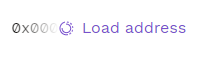
In the tBTC earnings, I was confused by the placeholder address for "Load address". I thought it meant that the beginning of my address is 0x000... which could be the real address of an operator. Also the "Load address did not always work"
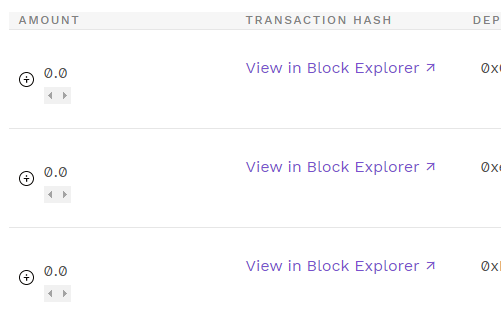
The amount of each tBTC earning shows as a 0.0 with a scrollbar. I assume it's not supposed to be like this.
My Keep Random Beacon earnings took a minute to load. The delay was long enough that I thought it wasn't working at all, but then it loaded.
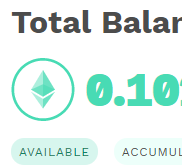
I don't understasnd why it shows the Available and Accumulating Indicators at the top with Total Balance. Is it because the balance includes the amounts for these two statuses?
Part 4: General Feedback
Open ended. Screenshots are helpful.
Some prompts to get you started:
- Where did you learn the most about Keep?
- What would you rank the staking dashboard's ease of use, on a scale of 1 to 10? 1 is the easiest, and 10 is the hardest.
- What other info would be helpful to include in the dashboard? What info was missing?
I ultimately learned the most about Keep from the Discord. I think there is a lot of information in various places, but I was not steered to a place that I felt like had all of the most up-to-date documentation, at least at the time I started staking. I went to Discord because basically every documentation and resource has been linked from the Discord. Additionally Discord messages are timestamped so it's easy to tell what is current and what is too old. Discord is easy to search as well. I think these are important attributes that made Discord attractive to me, in addition to the ability to ask people for help of course.
I would rank the dashboard's ease of use at a 3 (near easiest). It has improved a lot since I started using it. However it is still not totally polished. I encourage mapping out the primary user stories, walking through the app from the point of view of various user personas, and making sure the process is optimized end-to-end for such users.
I think for stakers, real-time APY and ROI information would be very attractive. Stakers have to make on-the-fly decisions about how much to deposit, and whether the earnings make up for the risk. Any information that can support these decisions would be helpful. If it's too hard to find such information or if it involves a lot of manual calculation, I believe many stakers will just roughly estimate it in their mind while heavily erring on the side of caution, meaning they would be less likely to deposit more than if the reward and risk ratio was very clear.
Thank you for your work building Keep and for caring about making the user experience great.
