

 iterative
Testing table depth test

Code Climate has analyzed commit f3291c74 and detected 0 issues on this pull request.
The test coverage on the diff in this pull request is 100.0% (85% is the threshold).
This pull request will bring the total coverage in the repository to 96.8% (0.0% change).
View more on Code Climate.
![qlty-cloud-legacy[bot] avatar](https://avatars.githubusercontent.com/in/9403?v=4 "Published by a pub.dev verified publisher")
One of the problems here is that the test leaves the workspace in an altered state. The config value is left as 0 after the test runs which means subsequent runs will always fail:
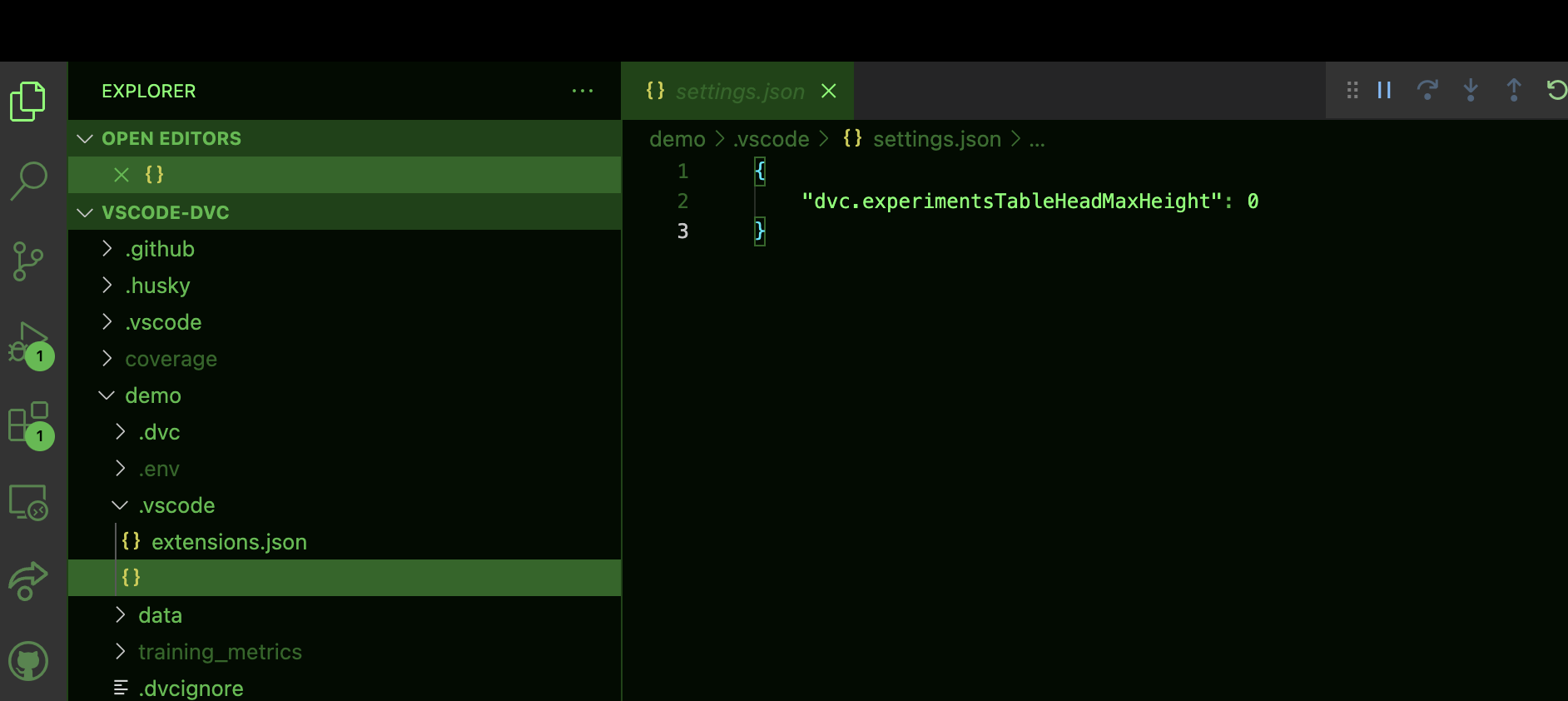

In the extension integration tests we reset the value after each call: https://github.com/iterative/vscode-dvc/blob/9b458fb52e24eff0b8dace471c13c2db3ed69d05/extension/src/test/suite/extension.test.ts#L47-L48
But could probably use after to remove the config value in this instance:
  after(() => {
    workspace
      .getConfiguration()
      .update(ConfigKey.EXP_TABLE_HEAD_MAX_DEPTH, undefined, false)
  })
One of the problems here is that the test leaves the workspace in an altered state. The config value is left as 0 after the test runs which means subsequent runs will always fail: In the extension integration tests we reset the value after each call: But could probably use after to remove the config value in this instance:
Nice catch! Thanks for the idea on using the after hook! Could this problem be the reason behind the telemetry event being called twice in this test during some of the CI calls? I don't see how, but maybe I'm missing something 🤔
One of the problems here is that the test leaves the workspace in an altered state. The config value is left as 0 after the test runs which means subsequent runs will always fail: In the extension integration tests we reset the value after each call: But could probably use after to remove the config value in this instance:
Nice catch! Thanks for the idea on using the
afterhook! Could this problem be the reason behind thetelemetryevent being called twice in this test during some of the CI calls? I don't see how, but maybe I'm missing something 🤔
Sometimes when using Mocha the calls can run into each other when the tests are async. I would just test that one of the calls was what you expected it to be.