

 apache
does version 5.1.1 support "count" and "group by"?
In the first case, I configure create_time as sharding key, and use "count" function. Print logs like this:
[http-nio-8080-exec-4] INFO ShardingSphere-SQL : Logic SQL: select count(accesslog0_.id) as col_0_0_ from ACCESS_LOG accesslog0_ where accesslog0_.create_time>=? and accesslog0_.create_time<? [http-nio-8080-exec-4] INFO ShardingSphere-SQL : SQLStatement: SQL92SelectStatement(limit=Optional.empty) [http-nio-8080-exec-4] INFO ShardingSphere-SQL : Actual SQL: main ::: select count(accesslog0_.id) as col_0_0_ from ACCESS_LOG_W202223 accesslog0_ where accesslog0_.create_time>=? and accesslog0_.create_time<? UNION ALL select count(accesslog0_.id) as col_0_0_ from ACCESS_LOG_W202224 accesslog0_ where accesslog0_.create_time>=? and accesslog0_.create_time<? UNION ALL select count(accesslog0_.id) as col_0_0_ from ACCESS_LOG_W202225 accesslog0_ where accesslog0_.create_time>=? and accesslog0_.create_time<? ::: [2022-05-01 00:00:00.0, 2022-07-01 00:00:00.0, 2022-05-01 00:00:00.0, 2022-07-01 00:00:00.0, 2022-05-01 00:00:00.0, 2022-07-01 00:00:00.0]
shardingsphere generated "UNION ALL" rather then add up the results, this leaded to an error.
In the second case, I configure startTime as sharding key, and use "group by" funtion. Print logs like this:
[http-nio-8080-exec-10] INFO ShardingSphere-SQL : Logic SQL: select infolog0_.method as col_0_0_, count(distinct infolog0_.actorId) as col_1_0_, count(infolog0_.id) as col_2_0_ from set_info_logs infolog0_ where infolog0_.startTime>=? and infolog0_.startTime<=? group by infolog0_.method order by count(infolog0_.id) DESC limit ? [http-nio-8080-exec-10] INFO ShardingSphere-SQL : SQLStatement: MySQLSelectStatement(table=Optional.empty, limit=Optional[org.apache.shardingsphere.sql.parser.sql.common.segment.dml.pagination.limit.LimitSegment@770083b1], lock=Optional.empty, window=Optional.empty) [http-nio-8080-exec-10] INFO ShardingSphere-SQL : Actual SQL: main ::: select DISTINCT infolog0_.method as col_0_0_, infolog0_.actorId as col_1_0_, count(infolog0_.id) as col_2_0_ from set_info_logs_202206 infolog0_ where infolog0_.startTime>=? and infolog0_.startTime<=? order by count(infolog0_.id) DESC limit ? ::: [2022-06-01 00:00:00.0, 2022-07-07 00:00:00.0, 2147483647]
shardingsphere generated sql without "goup by", which is unexpected.
I wonder how to use "count" and "grouo by" in version 5.1.1?

Hi @phdbutbachelor, can you provide your sharding configuration? I will try to reproduce this bug.

I will do this.
formatted sql
count
Logic SQL:
select
    count(accesslog0_.id) as col_0_0_
from
    ACCESS_LOG accesslog0_
where
    accesslog0_.create_time >= ?
    and accesslog0_.create_time < ?
Actual SQL:
select
    count(accesslog0_.id) as col_0_0_
from
    ACCESS_LOG_W202223 accesslog0_
where
    accesslog0_.create_time >= ?
    and accesslog0_.create_time < ?
UNION
ALL
select
    count(accesslog0_.id) as col_0_0_
from
    ACCESS_LOG_W202224 accesslog0_
where
    accesslog0_.create_time >= ?
    and accesslog0_.create_time < ?
UNION
ALL
select
    count(accesslog0_.id) as col_0_0_
from
    ACCESS_LOG_W202225 accesslog0_
where
    accesslog0_.create_time >= ?
    and accesslog0_.create_time < ?

[2022-05-01 00:00:00.0, 2022-07-01 00:00:00.0, 2022-05-01 00:00:00.0, 2022-07-01 00:00:00.0, 2022-05-01 00:00:00.0, 2022-07-01 00:00:00.0]
shardingsphere generated "UNION ALL" rather then add up the results
group by
Logic SQL:
select
    infolog0_.method as col_0_0_,
    count(distinct infolog0_.actorId) as col_1_0_,
    count(infolog0_.id) as col_2_0_
from
    set_info_logs infolog0_
where
    infolog0_.startTime >= ?
    and infolog0_.startTime <= ?
group by
    infolog0_.method
order by
    count(infolog0_.id) DESC
limit
    ?
Actual SQL:
select
    DISTINCT infolog0_.method as col_0_0_,
    infolog0_.actorId as col_1_0_,
    count(infolog0_.id) as col_2_0_
from
    set_info_logs_202206 infolog0_
where
    infolog0_.startTime >= ?
    and infolog0_.startTime <= ?
order by
    count(infolog0_.id) DESC
limit
    ?

[2022-06-01 00:00:00.0, 2022-07-07 00:00:00.0, 2147483647]
shardingsphere generated sql without "goup by".

I can't reproduce the two errors, the two sql can be executed correctly in my test case.
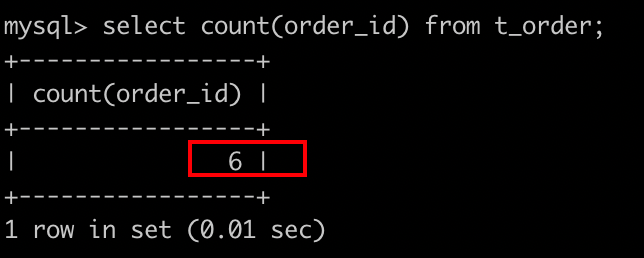
count
[INFO ] 2022-07-01 13:40:54.879 [Connection-1-ThreadExecutor] ShardingSphere-SQL - Logic SQL: select count(order_id) from t_order [INFO ] 2022-07-01 13:40:54.879 [Connection-1-ThreadExecutor] ShardingSphere-SQL - SQLStatement: MySQLSelectStatement(table=Optional.empty, limit=Optional.empty, lock=Optional.empty, window=Optional.empty) [INFO ] 2022-07-01 13:40:54.879 [Connection-1-ThreadExecutor] ShardingSphere-SQL - Actual SQL: ds_0 ::: select count(order_id) from t_order_0 UNION ALL select count(order_id) from t_order_1 [INFO ] 2022-07-01 13:40:54.879 [Connection-1-ThreadExecutor] ShardingSphere-SQL - Actual SQL: ds_1 ::: select count(order_id) from t_order_0 UNION ALL select count(order_id) from t_order_1
group by and order by
[INFO ] 2022-07-01 14:38:54.684 [Connection-1-ThreadExecutor] ShardingSphere-SQL - Logic SQL: select * from t_order group by t_order.order_id order by t_order.status [INFO ] 2022-07-01 14:38:54.684 [Connection-1-ThreadExecutor] ShardingSphere-SQL - SQLStatement: MySQLSelectStatement(table=Optional.empty, limit=Optional.empty, lock=Optional.empty, window=Optional.empty) [INFO ] 2022-07-01 14:38:54.684 [Connection-1-ThreadExecutor] ShardingSphere-SQL - Actual SQL: ds_0 ::: select * from t_order_0 group by t_order_0.order_id order by t_order_0.status [INFO ] 2022-07-01 14:38:54.684 [Connection-1-ThreadExecutor] ShardingSphere-SQL - Actual SQL: ds_0 ::: select * from t_order_1 group by t_order_1.order_id order by t_order_1.status [INFO ] 2022-07-01 14:38:54.684 [Connection-1-ThreadExecutor] ShardingSphere-SQL - Actual SQL: ds_1 ::: select * from t_order_0 group by t_order_0.order_id order by t_order_0.status [INFO ] 2022-07-01 14:38:54.684 [Connection-1-ThreadExecutor] ShardingSphere-SQL - Actual SQL: ds_1 ::: select * from t_order_1 group by t_order_1.order_id order by t_order_1.status
mysql> select * from t_order group by t_order.order_id order by t_order.status;
+----------+---------+--------+
| order_id | user_id | status |
+----------+---------+--------+
|        1 |       1 | 1      |
|       11 |      11 | 11     |
|       12 |      12 | 12     |
|       13 |      13 | 13     |
|       14 |      14 | 14     |
|       15 |      15 | 15     |
|       16 |      16 | 16     |
|        2 |       2 | 2      |
|        3 |       3 | 3      |
|        4 |       4 | 4      |
|        5 |       5 | 5      |
|        6 |       6 | 6      |
+----------+---------+--------+
12 rows in set (0.02 sec)
@strongduanmu the configuration is:
schemaName: eeb
dataSources: main: dataSourceClassName: com.zaxxer.hikari.HikariDataSource driverClassName: com.mysql.cj.jdbc.Driver jdbcUrl: jdbc:mysql://x.x.x.x/eeb?useUnicode=TRUE&characterEncoding=UTF-8&nullCatalogMeansCurrent=true&serverTimezone=PRC username: x password: x
rules:
- !SHARDING tables: set_info_logs: actualDataNodes: main.set_info_logs tableStrategy: standard: shardingColumn: startTime shardingAlgorithmName: shardingLogsByMonths set_error_logs: actualDataNodes: main.set_error_logs tableStrategy: standard: shardingColumn: startTime shardingAlgorithmName: shardingLogsByMonths shardingAlgorithms: shardingLogsByMonths: type: SHARDING_LOGS_BY_MONTHS
props: sql-show: true check-table-metadata-enabled: true
Can you give me a simple runnable demo to investigate this issue,thank you.
Can you give me a simple runnable demo to investigate this issue,thank you.
when the 'distinct' and 'group by' are used in one sql , the 'group by' will be replace by 'order by ' after creating ShardingSphere-SQL
CASE:
Logic SQL:
SELECT COUNT(DISTINCT DATE_FORMAT(LEFT(b.create_date,13),'%Y-%m-%d %H')) hourNum, date FROM table_name b where (b.p_id,b.d_id) IN ( (?, ?) ) and b.create_date >= ? AND b.create_date < ? GROUP BY date,d_id
Actual SQL:
SELECT COUNT(DISTINCT DATE_FORMAT(LEFT(b.create_date,13),'%Y-%m-%d %H')) hourNum, date FROM table_name_1 b where (b.p_id,b.d_id) IN ( (?, ?) ) and b.create_date >= ? AND b.create_date < ? ORDER BY DATE ASC,deviceId ASC
version: 5.1

Hello , this issue has not received a reply for several days. This issue is supposed to be closed.
![github-actions[bot] avatar](https://avatars.githubusercontent.com/in/15368?v=4 "Published by a pub.dev verified publisher")
@zhao-en Please don't use COUNT(DISTINCT DATE_FORMAT(LEFT(b.create_date,13),'%Y-%m-%d %H')) nested aggregation function, since ShardingSphere doesn't support it now.