

 Macaulay2
Cocalc
I no longer can figure out how to run Macaulay2 in CoCalc -- see https://faculty.math.illinois.edu/Macaulay2/TryItOut/ .
Also, CoCalc has the concept of "kernel" -- could Macaulay2 become one of them, with some work?

I no longer can figure out how to run Macaulay2 in CoCalc -- see https://faculty.math.illinois.edu/Macaulay2/TryItOut/ .
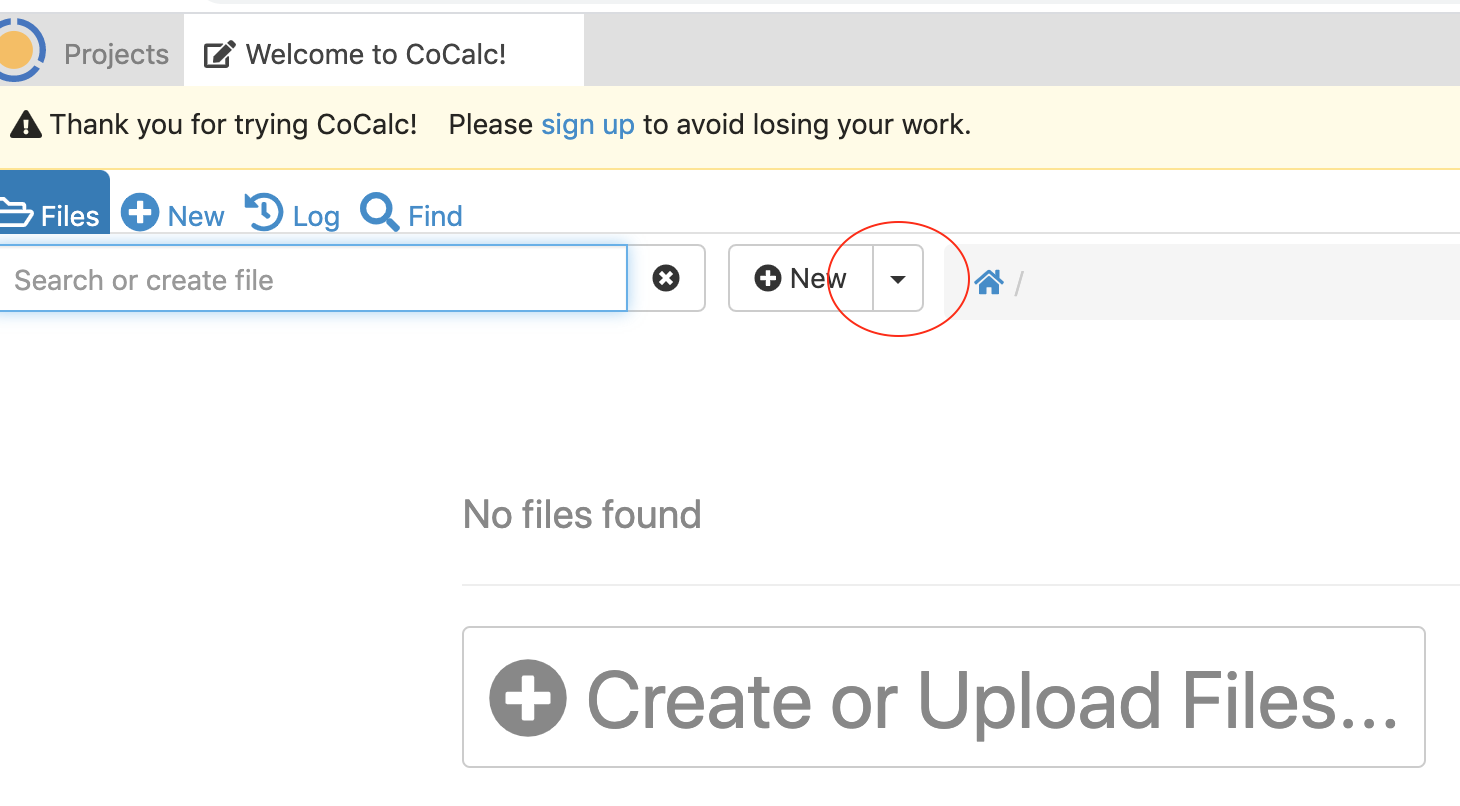
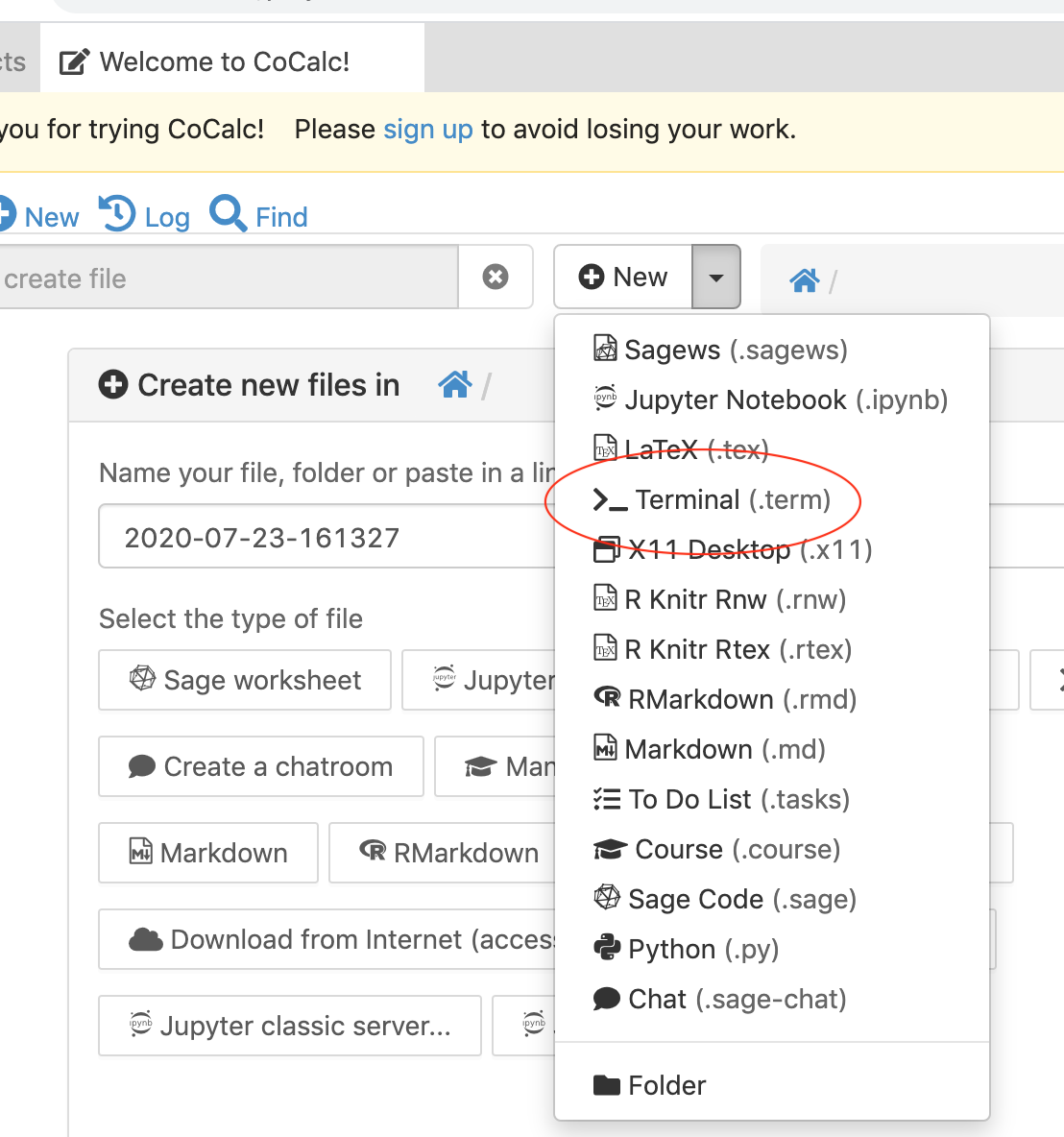
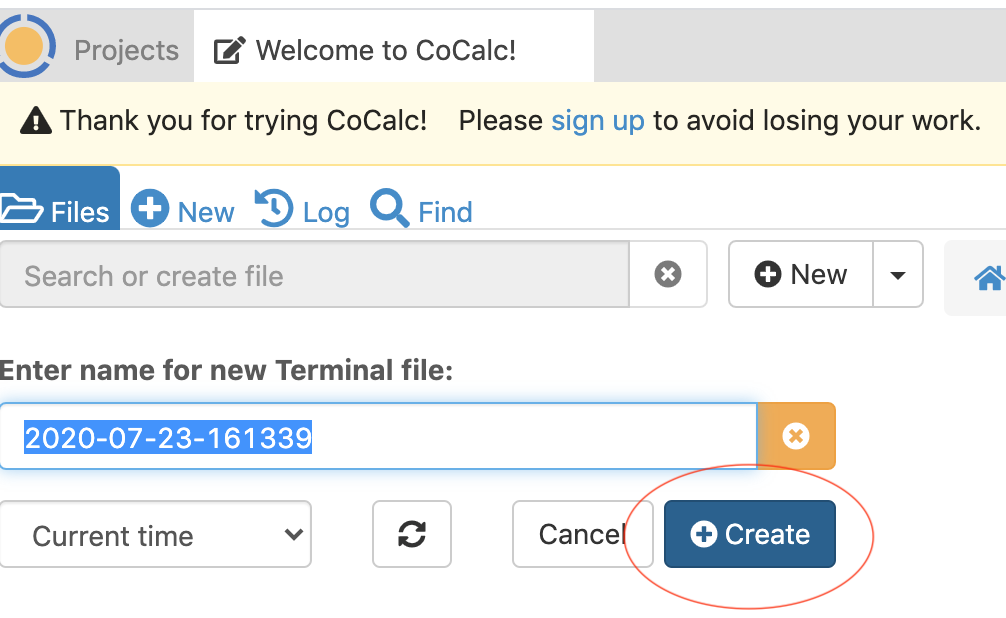
Open a terminal project and run M2:
~$ M2
Macaulay2, version 1.16
--storing configuration for package FourTiTwo in /home/user/.Macaulay2/init-FourTiTwo.m2
--storing configuration for package Topcom in /home/user/.Macaulay2/init-Topcom.m2
with packages: ConwayPolynomials, Elimination, IntegralClosure, InverseSystems, LLLBases, MinimalPrimes,
               PrimaryDecomposition, ReesAlgebra, TangentCone, Truncations

i1 :
Also, CoCalc has the concept of "kernel" -- could Macaulay2 become one of them, with some work?
This is the same as a Jupyter kernel, discussed in #605. See this document. cc: @radoslavraynov.

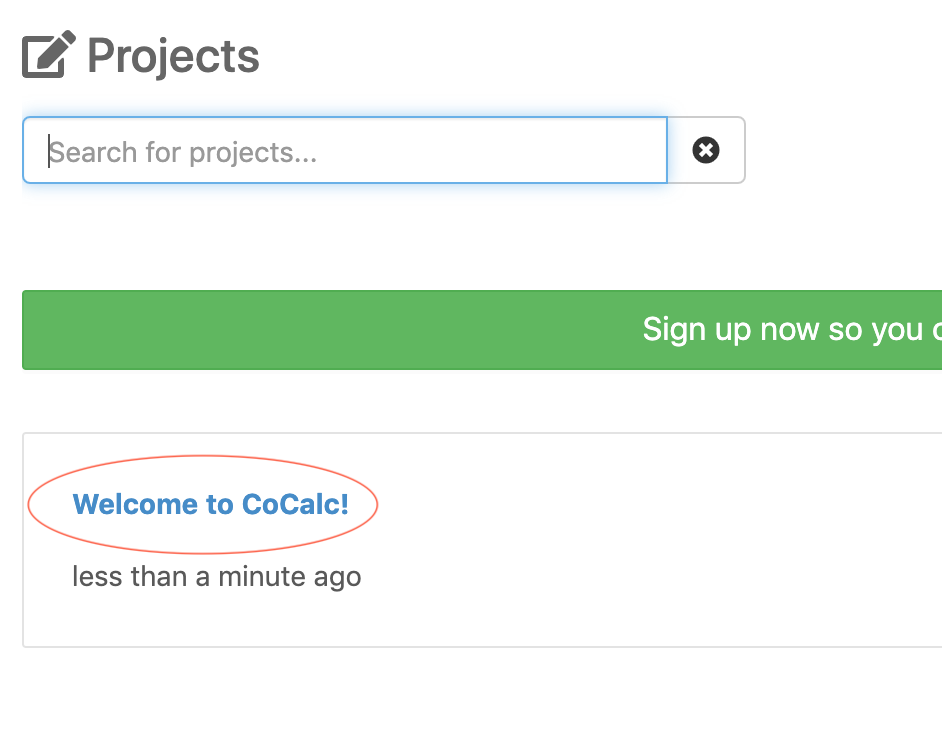
Mahrud, what would it take for CoCalc to offer M2 as one of its kernels?
I would not know, but probably a concerted effort to get the Jupyter kernel to a stable place with official support would go a long way. I think a lot of effort has been made, but it's not well publicized here or on the Macaulay2 website. To be fair, even the Emacs interface is almost hidden in the documentation, which makes it hard to learn M2 without attending a workshop, but we don't have Jupyter sessions at workshops.
cc: @antonleykin @dimpase
The emacs documentation is prominently featured in the "getting started" documentation, so it's by no means "almost hidden".
The emacs documentation is prominently featured in the "getting started" documentation, so it's by no means "almost hidden".
Most beginners don't read the documentation.
Maybe we should have a workshop on that: how to read the documentation, and why.
Hi, came across this as I was looking for something else. You can also run M2 on a sage worksheet (in CoCalc) just by changing the mode... so on a sage worksheet you can write (an example from code I have)
%macaulay2
kk = QQ[w]/ideal(w^2 + w + 1)
R = kk[y,z]
I = radical ideal(y^3 - 1,(z-y-1)*(z^2-y))
Then run these lines of code/input cell and an output cell with the M2 output will display below.
I have to experiment more with this but it seems that one can use a sage worksheet as a M2 worksheet in this fashion

Thanks, @fragandi, that is extremely useful! In case anyone else might be confused by the same thing as I was, let me point out that the initial discussion (between Dan Grayson and Mahrud Sayrafi) was about accessing Macaulay2 via the jupyter notebook (.ipynb) while Francesca Gandini's comment is about accessing M2 in the sage worksheet (.sagews).

Macaulay2 is now one of the available Jupyter kernels in CoCalc. Closing
